GPS-Denied Navigation

Reliable UAV navigationwhen GPS cannot be trusted.

KALGARD Systems develops onboard navigation and georeferencing technologies for drones operating in GNSS-denied, jammed, spoofed, or unreliable environments.

Focus

GNSS-denied

Navigation for degraded or unavailable satellite signals.

Approach

Onboard

Onboard estimation with periodic absolute correction from observed environmental features.

Stage

Flight-proven

Astrel is flight-proven; the wider MerlinSight lineup is in development.

Current product

MerlinSight Astrel

MerlinSight by KALGARD SYSTEMS

System note

MerlinSight Astrel, the positioning module of the lineup, keeps a continuous onboard position with periodic absolute correction, with no GNSS or datalink dependence in flight.

Flight validation

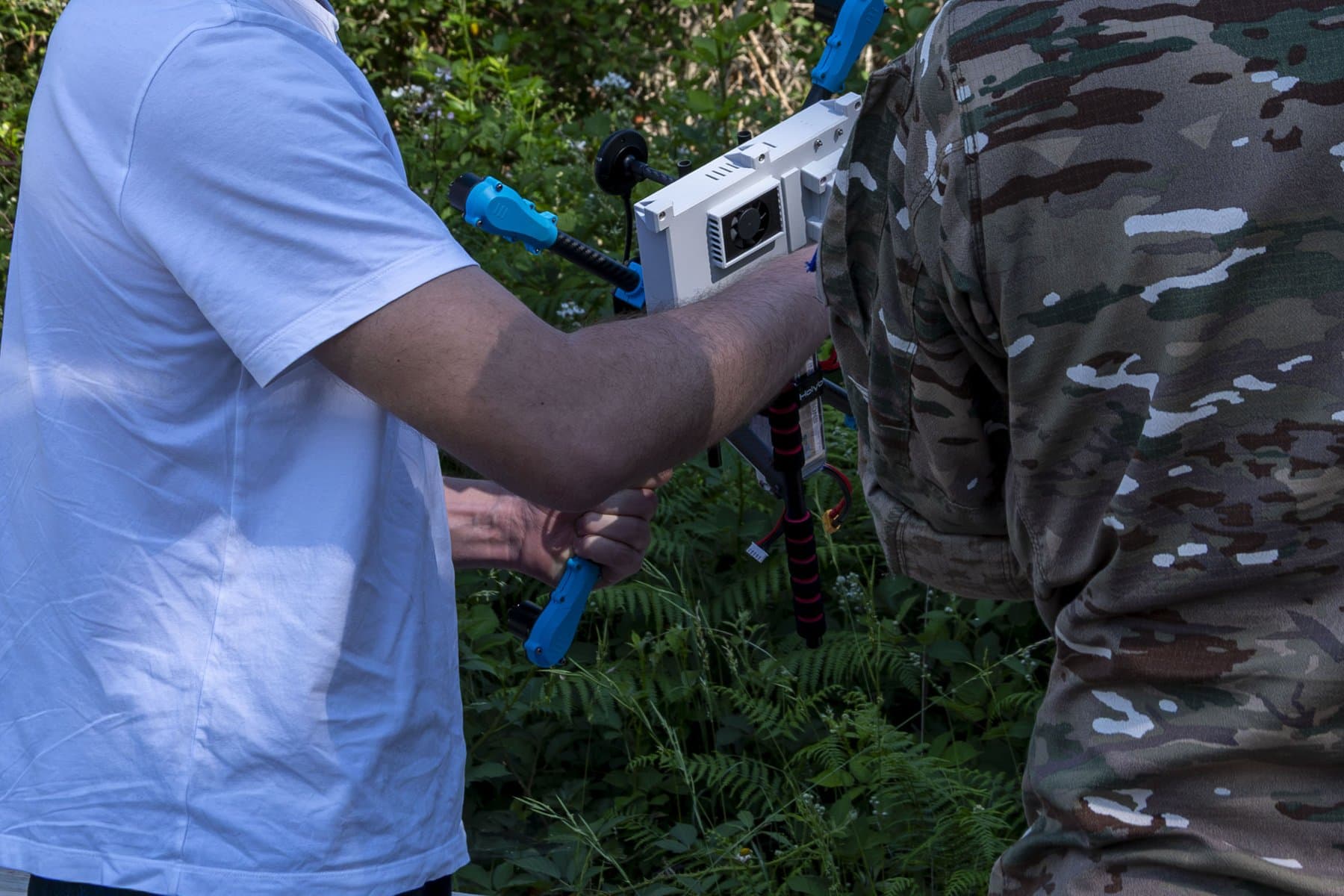
Real flight testing has demonstrated under 5 m mean 2D error, including a flight test with an army regiment.

Mission

Why this matters

Reliable positioning is a hard requirement for UAV operations, yet GNSS is not always available or trustworthy.

KALGARD is building navigation systems that help drones maintain localization and mission continuity when satellite signals degrade, are spoofed, or disappear.

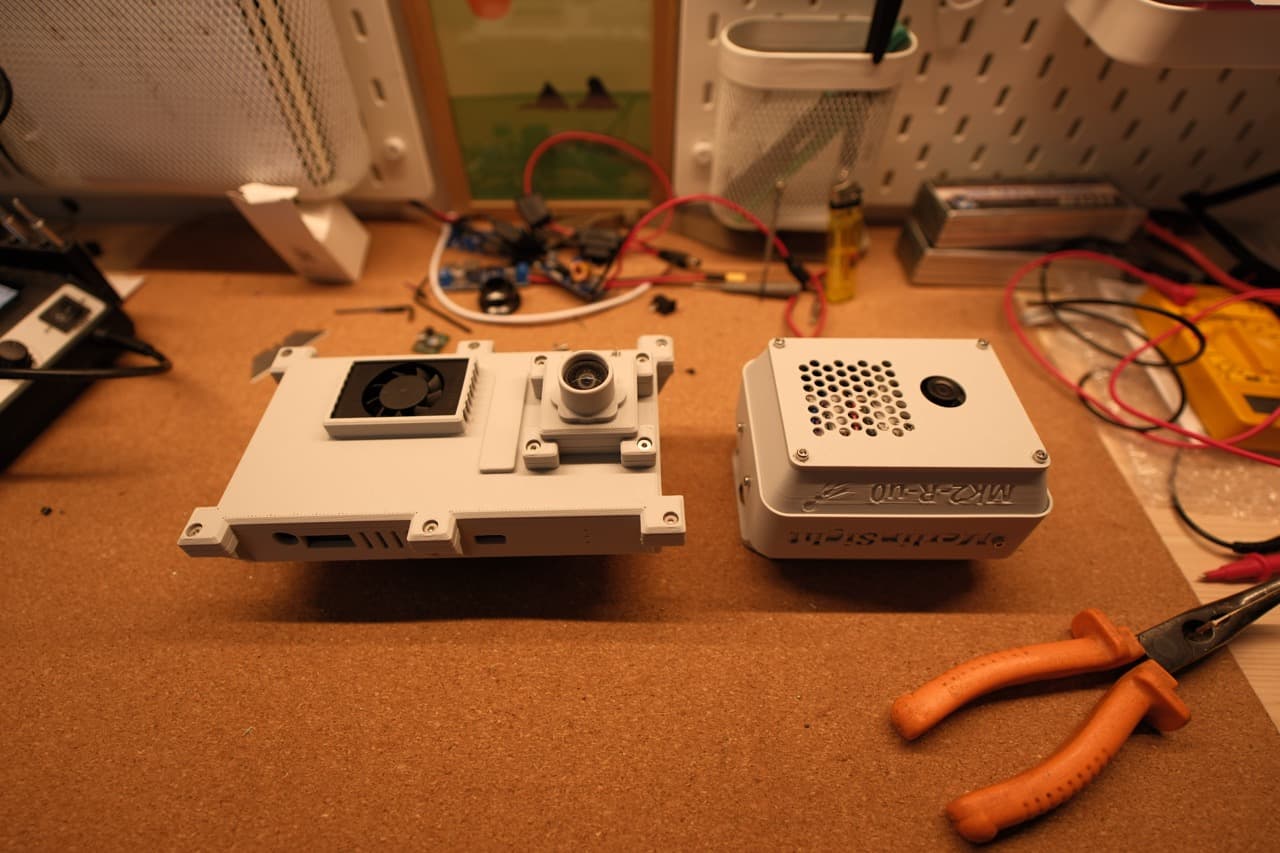
Prototype and UAV integration work in the KALGARD workshop

Development context

Hardware and flight integration work focused on practical UAV deployment constraints.

Capabilities

What the MerlinSight lineup delivers

KALGARD technologies give aerial platforms trusted answers where satellite positioning cannot be relied on.

Line diagram of a UAV holding its own position above terrain

Astrel

Position of the aircraft

Onboard navigation that keeps a trusted position when GNSS is jammed, spoofed or absent: a continuous position with periodic absolute correction. Flight-proven, with under 5 m mean 2D error measured in real flight.

Explore Astrel

Arrow

Observed points

An observed point becomes a ground coordinate. Stealth, with no EM wave emission.

Line glyph of a UAV marking an observed ground point

In development

Sillage

Mapping

Maps of overflown areas, updated by every flight.

Line glyph of a gridded map with a georeferenced area

In development

What We Build

MerlinSight

MerlinSight is the KALGARD product line for flying without GNSS.

Astrel, the positioning module, is the current flight-proven product. Arrow and Sillage extend the lineup and are in development.

Astrel

Flight-proven product

Astrel

The positioning module. It sits on the aircraft and preserves navigation when GNSS is jammed, spoofed or unavailable.

Delivery

Available as a full module combining sensors, compute and software. Software-only integration on existing hardware depends on the platform’s sensors, synchronisation, compute and flight-control access.

System overview

Astrel provides GNSS-independent absolute positioning: a continuous onboard position with periodic absolute correction, for UAVs that must keep operating when satellite positioning is unavailable or untrustworthy.

Visual-inertial estimation

Onboard estimation from camera and inertial sensing maintains a continuous position solution between corrections.

Absolute map correction

The downward camera view is matched against preloaded georeferenced reference data to correct the position with absolute fixes during flight.

GPS-like integration

Latitude, longitude and altitude are output to the flight controller as GPS-like NMEA or MAVLink. No autopilot modification, no GNSS or datalink dependence in flight.

Public-safe map correction visualization with observation tracks over grayscale reference imagery
Public-safe feature overlay visualization for map-based correction

Correction approach

Map-based localization

Astrel corrects its onboard estimate by matching the downward camera view against preloaded georeferenced reference data, keeping the position continuous with periodic absolute correction when GNSS cannot be relied on.

2D trajectory comparison from a flight test with an army regiment, showing GPS ground truth and the MerlinSight Astrel estimate

Evaluation

Measured in real flight

In real flight testing, Astrel has demonstrated under 5 m mean 2D error, measured post-convergence against GPS ground truth. The figure shows a flight test performed with an army regiment.

Flight test with an army regiment

3.43 m

Mean 2D error

4.24 m

Mean 3D error

1.76 m

2D standard deviation

5.74 m

2D p90

1.55 m

Altitude MAE

5m 17s

Flight duration

The flight duration was set by the authorized flight zone. Astrel is designed to keep a continuous position with periodic absolute correction rather than let dead-reckoning error accumulate with elapsed time; longer and more varied flights are part of ongoing validation.

The rest of the lineup

In development

Arrow

Georeferencing of observed points

An observed point becomes a ground coordinate, ready to report and share. Stealth: no laser, no EM wave emission, nothing that gives the aircraft away.

In development

Sillage

Mapping from flight

Flights become maps. Every flight updates the map of the area it covers, georeferenced, without any GNSS.

Applications

Where our technologies apply

KALGARD develops onboard navigation and georeferencing technologies for aerial platforms operating where satellite positioning is degraded, denied or insufficient.

01

Defence & security

  • 01Operations through jammed or spoofed airspace
  • 02Deep reconnaissance beyond the reach of a reliable data link
  • 03Mission continuity when GNSS is lost mid-flight
  • 04Reporting the position of observed points of interest, in ground coordinates
02

Civil & critical infrastructure

  • 01Operational continuity for critical infrastructure exposed to interference
  • 02Inspection in urban and constrained environments where GNSS degrades
  • 03Search and rescue
  • 04BVLOS corridors independent of GNSS availability

Capability detail, performance figures and integration data are shared with qualified partners under NDA.

System walkthrough

Navigation that recovers when GNSS disappears

From visual-inertial estimation to terrain-matched correction, this sequence shows how MerlinSight Astrel contains drift and brings the aircraft back onto a trusted trajectory.

Credibility

Research to product

KALGARD Systems is an INRIA-incubated company focused on resilient UAV navigation.

Focused technical development

The company is building the MerlinSight lineup at the intersection of onboard perception, navigation, and UAV integration.

INRIA campus seen from the sky

Incubation

Inria logo

The company is being developed with INRIA incubation support.

Workshop testing and prototype preparation
Partner Search

We are looking for partners to help MerlinSight bring autonomy and resilience to drones.

KALGARD is opening conversations with organizations interested in resilient UAV navigation, field validation, and operational deployment.

UAV integrators

Explore MerlinSight Astrel integration on existing drone platforms.

Defense and civil end users

Discuss operational needs and validation scenarios in GNSS-degraded environments.

Investors

Support the next stage of product development, testing, and market access.

Team

Aeronautics and robotics, built into one team

KALGARD brings together aerospace engineering and advanced robotics expertise to develop resilient navigation systems from research through flight integration.

Jules

Founder · Aeronautical Engineer

Imperial College London

Aeronautical engineering expertise focused on UAV systems, product development, and bringing MerlinSight into operational flight environments.

Thibault

PhD in Robotics · Engineer

ISAE-SUPAERO

Robotics and engineering expertise focused on autonomous navigation, onboard perception, and resilient localization.

Contact

Start the conversation

We welcome conversations with UAV manufacturers, defense and aerospace partners, public innovation stakeholders, investors, and engineers interested in the problem space.

Call to action

Partnerships, pilots, and technical discussions.

Get in touch if you are exploring resilient navigation, integration into a UAV platform, investment, or opportunities to work together.

Contact Information

Jules Baldantoni

Founder

jules.baldantoni@inria.fr

Thibault Noël

Robotics Engineer

thibault.noel@inria.fr